Interdisciplinary Working Group for Movement Disorders
Professor Dressler Delivers Opening Lecture at the Annual Congress of the Chinese Botulinum Toxin Society in Shanghai

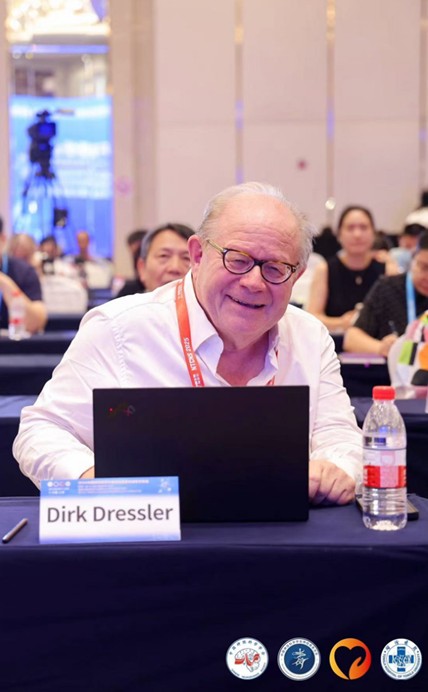
Professor Dirk Dressler, head of the Movement Disorders Section at Hannover Medical School in Hannover, Germany, was invited to deliver the opening lecture at the annual congress of the Chinese botulinum toxin society in Shanghai. In his talk, he discussed the safety of the botulinum toxin therapy. ‘When we introduced botulinum toxin therapy in the 1980s, everybody was concerned about its safety. After all, botulinum toxin was infamous as a lethal food poison and as a potent biological weapon. Now, after decades of therapeutic use in millions of patients, I am proud to say that this therapy is absolutely safe. We have developed algorithms to guide users in producing marvellous results in our patients,’ he explained. As co-director of Tongji University Botulinum Toxin Research Center in Shanghai, Dressler regularly attends this congress series, which this time brought together over 500 participants from all over China. It is annually organised by the Neurotoxin Branch of the Chinese Neuroscience Society (NTCNS), which has more than 800 members. In his opening remarks, Dressler reviewed the development of NTCNS and outlined its future perspectives. He congratulated Professor Lingjing Jin from Shanghai for his successful leadership of the NTCNS.
During his stay in Shanghai, Dressler visited the Shanghai Sunshine Rehabilitation Center in Songjiang District. It is directed by Professor Lingjing Jin, Dressler’s long-term collaborator at Tongji University Medical School. Having recently undergone a major expansion, it now houses more than 1200 inpatient beds and extensive outpatient clinics.
At the start of his trip to China, Dressler met Professor Huifang Shang and her movement disorders group at West China Hospital in Chengdu. Professor Shang is one of the leading experts in genetics of movement disorders in China. Chengdu is the capital of Sichuan Province. With a population of over 20 million, it is one of the largest cities in the world. It is the cultural centre of southwest China and is considered the gateway to Tibet.
Unsere Zertifizierer