Interdisciplinary Working Group for Movement Disorders
IAB-Interdiciplinary Working Group for Movement Disorders interviews Professor Dressler about their new MoveNeuroHub Project
MoveNeuroHub (MNH) began a few months ago. It is another novel initiative of IAB-Interdisciplinary Working Group for Movement Disorders. It is an online platform that gives patients quick and direct access to a wide range of expert knowledge in the field of movement disorders. Using state-of-the-art video conferencing technology, it reaches out to patients both nationally and internationally, wherever they are. Patients can select an expert from the platform’s expert panel. They can check their chosen expert’s availability and, within a few days, the platform will connect them with their expert for a direct, one-to-one consultation normally scheduled for one hour. Professor Dr Dr Dressler is one of the first experts to offer his services on MNH. Dr Fereshte Adib Saberi, founder of IAB, wants to find out about his experience with this new format.
Adib Saberi: Professor Dressler, why did you join MNH?
Dressler: I have been working in the movement disorders field for over 40 years. During this time, I have seen the same problems arising time and time again. The first problem is orientation and overview. Often, movement disorders are difficult to diagnose. They may be severe or trivial, functional or orthopaedic. This is often confusing for patients and the medical community. The consequence is, that many patients get lost in the medical system, wandering from expert to expert. This process can take years. The next problem is access to specialists. As movement disorder therapies become more complex, the demand for second opinions is increasing. As a result, waiting lists are getting longer and longer, even for private patients. The last problem is geographic access. Experts in movement disorders are rare, so travelling often becomes necessary – sometimes even internationally. Our hope was, to solve these problems with the help of MNH.
Adib Saberi: Does it work?
Dressler: Yes, amazingly well. In patients needing orientation, we can usually formulate a provisional diagnosis and suggest a pathway for further evaluation. As for expert accessibility, it currently takes seven days on average to have your direct consultation. And as for geographic accessibility, we have a growing number of patients from abroad, especially from countries with less developed health care systems.
Adib Saberi: Does the patient need to prepare for the consultation?
Dressler: We believe in direct, personal communication, not paperwork. We don’t require previous reports to be mailed in advance. It is enough, when the patient has the information at hand that he has filed.
Adib Saberi: Are there limitations of MNH?
Dressler: This format does not replace the traditional patient-physician relationship. It is an add-on, only. Therapies have to be decided and controlled by direct physical contact between the physician and the patient. And, of course, if for example botulinum toxin therapy becomes necessary, the physical contact becomes necessary.
Adib Saberi: So, what’s your resume?
Dressler: Our first experience is totally positive. Now, we are wondering why such a platform wasn’t available earlier. It seems we needed the push of the Corona crisis for this.
Adib Saberi: And what about the future?
Dressler: We need more movement disorder experts to join MNH. It’s easy to join and the work is really rewarding. We also need more health professionals from other fields of movement disorders, such as physiotherapy, rehabilitation, psychology, legal counselling and social counselling.
Adib Saberi: Professor Dressler, thank you very much for sharing your experience.
https://de.wikipedia.org/wiki/Dirk_Dressler
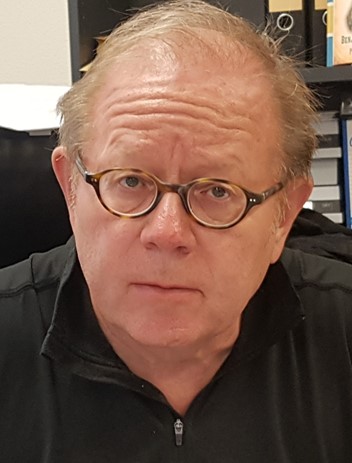
Dirk Dressler, MD, PhD
Professor of Neurology
Head of Movement Disorders Section
Department of Neurology
Hannover Medical School
Carl-Neuberg-Str. 1
D-30625 Hannover, Germany
Unsere Zertifizierer