
Interdisciplinary Working Group for Movement Disorders
Professor Dressler Visits Major Movement Disorders Centres in China
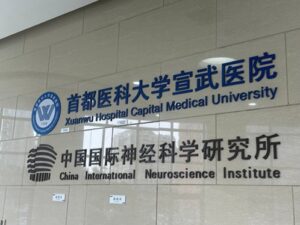
Professor Dr Dr Dirk Dressler, head of the Movement Disorders Section at Hannover Medical School in Hannover, Germany, visited major movement disorders centres in China during a two-week trip across the country. He began in Beijing, where he visited Peking Union Medical College Hospital, one of the country’s top-ranked medical institutions. There, he met Professor Xinhua Wan, head of the Department of Neurology’s Movement Disorders Group, who has been a scientific partner and close friend of his for over 30 years. He also visited Professor Zhiqui Mao, head of the Movement Disorders Group at the Department of Neurosurgery at Beijing Shijitan Hospital, Capital Medical University, a new and fast-growing group. While at Capital University in Beijing, Dressler also connected with China International Neuroscience Institute, which is based at Xuanwu Hospital, which is a partner of the International Neuroscience Institute in Hannover, where Dressler will be continuing some of his clinical work this autumn.
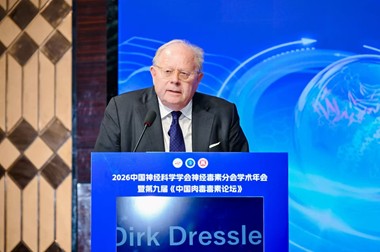
From August 22nd to 23rd, Dressler was the invited international guest of honour at the 8th Annual Chinese Neurotoxin Congress, organised by the Neurotoxin Branch of the Chinese Neuroscience Society and held in Zhengzhou, Henan Province. In his keynote lecture, Dressler explained how botulinum toxin therapy has transformed the landscape of movement disorders and consequently the entire field of neurology.
At the Shanghai Sunshine Rehabilitation Centre, the largest rehabilitation centre in China, Dressler reviewed current research projects of Professor Lingjing Jin’s research group. At Shanghai’s Tongji University Medical School, Dressler met with Professor Lizhen Pan to discuss the latest findings from the botulinum toxin research centre headed by Pan and Dressler.
His last stop was the Department of Neurology at the First Affiliated Hospital of Sun Yat-sen University in Guangzhou, Guangdong Province, the fourth largest city in China with a population of 18.5 million. There, he met with Professor Liu Gang, head of the most active movement disorders group in Southern China. ‘China is a country on the move. Technical achievements are spectacular and the speed is incredible. However, establishing a truly innovative scientific culture, especially in medicine, remains a significant challenge,’ Dressler said upon his return.
Unsere Zertifizierer